Mud in a Houston backyard isn't just ugly. It destroys grass, ruins shoes, and turns your yard into a swamp after any decent rain. The problem gets worse every year because Houston's clay soil doesn't drain well, and our humidity keeps everything damp. If you're tired of muddy patches taking over your yard, there are real fixes that work in our climate.
Houston's Soil Is the Real Problem
Houston sits on heavy clay soil that holds water like a bucket. When rain falls, it doesn't drain down. It pools on top and stays there for days. Add in our summer humidity and afternoon thunderstorms, and you've got a recipe for permanent mud. Most homeowners try to just mow over it or throw down wood chips, but that's temporary. You need to address the drainage underneath, not just cover it up.
Grade Your Yard So Water Actually Leaves
The first step is making sure water flows away from your house and low spots. Walk your yard after a rain and watch where puddles form. Those low spots are where mud lives. You need a slope of at least one inch of drop for every ten feet of yard. If your yard is flat or slopes the wrong way, water will sit in those depressions and keep the soil soggy.
Regrading is usually a job for a professional because you need equipment and someone who understands how to do it without messing up your foundation or neighbors' drainage. But it's worth the investment. Once water moves away from those problem areas, you stop feeding the mud cycle. Grass can grow in soil that isn't waterlogged all the time.
Install Proper Drainage Solutions
If regrading alone won't fix it, you need to move water away underground. French drains are common in Houston yards. Basically, you dig a trench, lay perforated pipe, and backfill it with gravel. Water soaks into the gravel and moves through the pipe to a spot where it can drain away safely. It's not visible once it's done, and it stops mud from forming in specific problem areas.
Sometimes the issue is that water has nowhere to go because your yard is surrounded by other yards at the same level. In that case, a dry well or rain garden can work. A dry well is a deep hole filled with gravel that lets water soak into the ground below the clay layer. A rain garden is shallower and can actually grow plants that like wet feet. Both slow down water movement and let it soak in instead of pooling on the surface.
Choose the Right Ground Cover for Wet Areas
After you've fixed the drainage, you still need to cover the soil so it doesn't turn to mud when water does sit there briefly. Grass is the best option if the area drains reasonably well. In Houston, you want warm-season grass like Zoysia or Bermuda. Both handle wet conditions better than cool-season grasses, and Zoysia especially tolerates poor drainage.
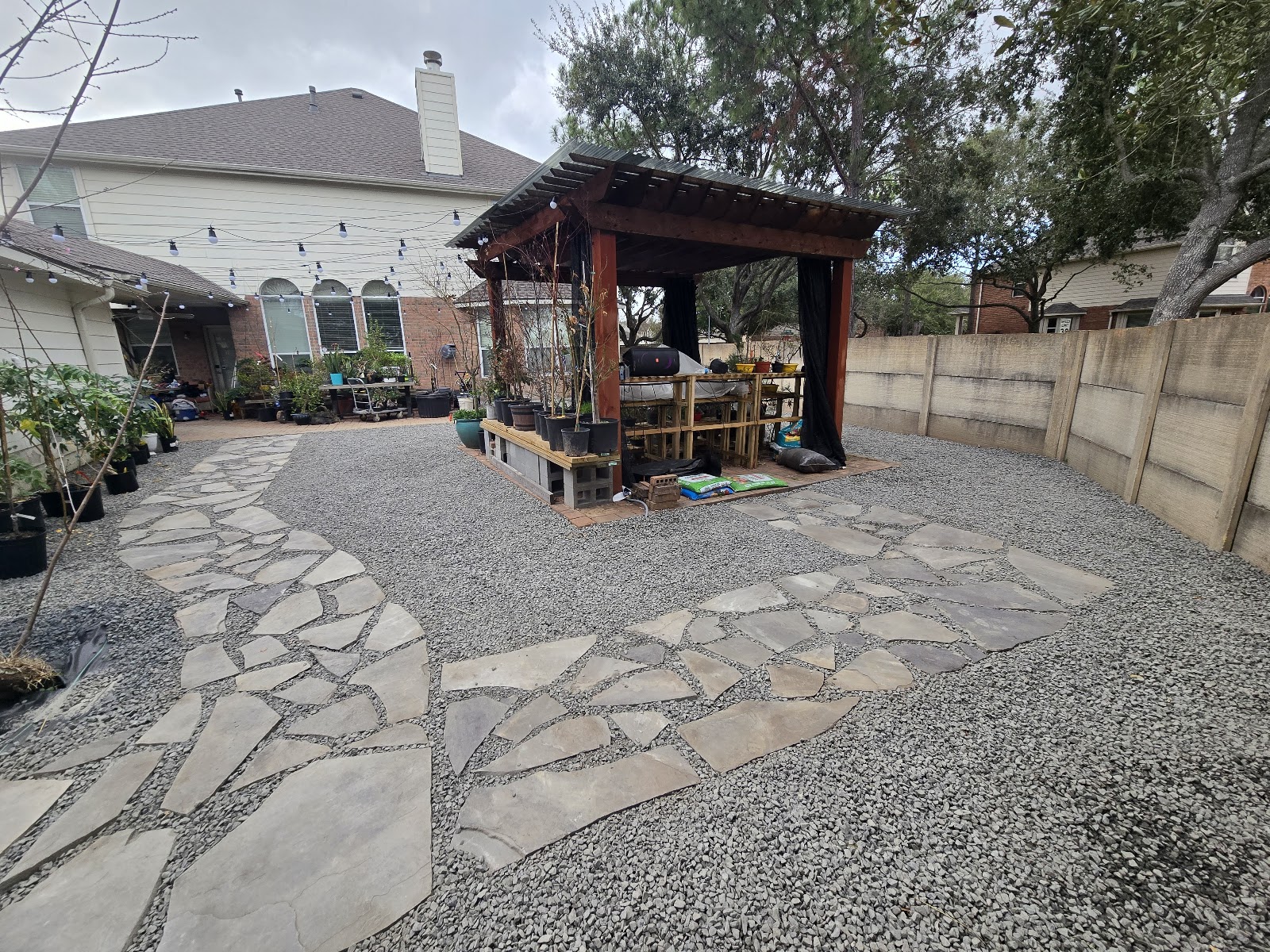
If an area stays too wet even after drainage work, grass won't survive. Then you're looking at hardscape or shade-tolerant ground covers. Mulch works in some spots, but it breaks down fast in our humid climate and needs replacing every year or two. Gravel, permeable pavers, or even a small patio might be better long-term choices for spots that are perpetually damp. Stone doesn't rot, doesn't need replacing, and actually helps water drain.
Keep Your Gutters and Downspouts in Check
A lot of Houston homeowners don't realize their gutters and downspouts are making the mud worse. Gutters that overflow or downspouts that dump water right next to the house push enormous amounts of water into your yard during storms. Make sure your gutters are clean and your downspouts extend at least four to six feet away from the house. Better yet, run them to a dry well or rain garden so that water gets managed instead of just pushed to the lowest spot in your yard.
Maintain Grass to Survive the Wet
Once you've fixed the drainage and graded your yard, keep your grass healthy so it can handle Houston's wet periods. Mow at the right height for your grass type. Zoysia should be around one and a half inches, Bermuda around two inches. Taller grass shades the soil and keeps it from compacting as much when you walk on it. Don't mow when the yard is soaking wet. That just compacts the soil more and damages the grass.
Aerate your lawn once a year, usually in spring. Aeration punches holes in the soil so water can move through it instead of sitting on top. In Houston's clay, this makes a real difference over time.
Getting rid of mud permanently means fixing the water movement, not just hiding the problem. It takes work and sometimes money upfront, but you'll have a yard that looks decent year-round instead of a mud pit every time it rains.
If mud is taking over your Houston backyard, UVP Lawn Care & Landscaping can assess your drainage problems and set up a real solution. Call us to schedule a yard evaluation.