Houston gets hit hard when the rain comes. A typical summer storm can drop an inch or more in an hour, and when that water runs across your property, it doesn't just disappear. It moves gravel around, exposes soil underneath, and leaves your landscaping looking like something the weather beat up. If you've invested in gravel beds, pathways, or driveways, you know how frustrating it is to watch the rain redistribute everything you've laid out.
Why Houston Rain Is Tough on Gravel
The problem isn't just the amount of water. Houston's clay soil underneath doesn't absorb water quickly. When rain falls, it sits on top and flows sideways across your yard, gathering speed. Gravel, especially smaller pea gravel, gets picked up and moved downhill or toward storm drains. You end up with bare spots, exposed landscape fabric, and thin patches where you had nice coverage before. The bigger your slope or the more open your gravel bed, the worse it gets.
Use the Right Size and Type of Gravel
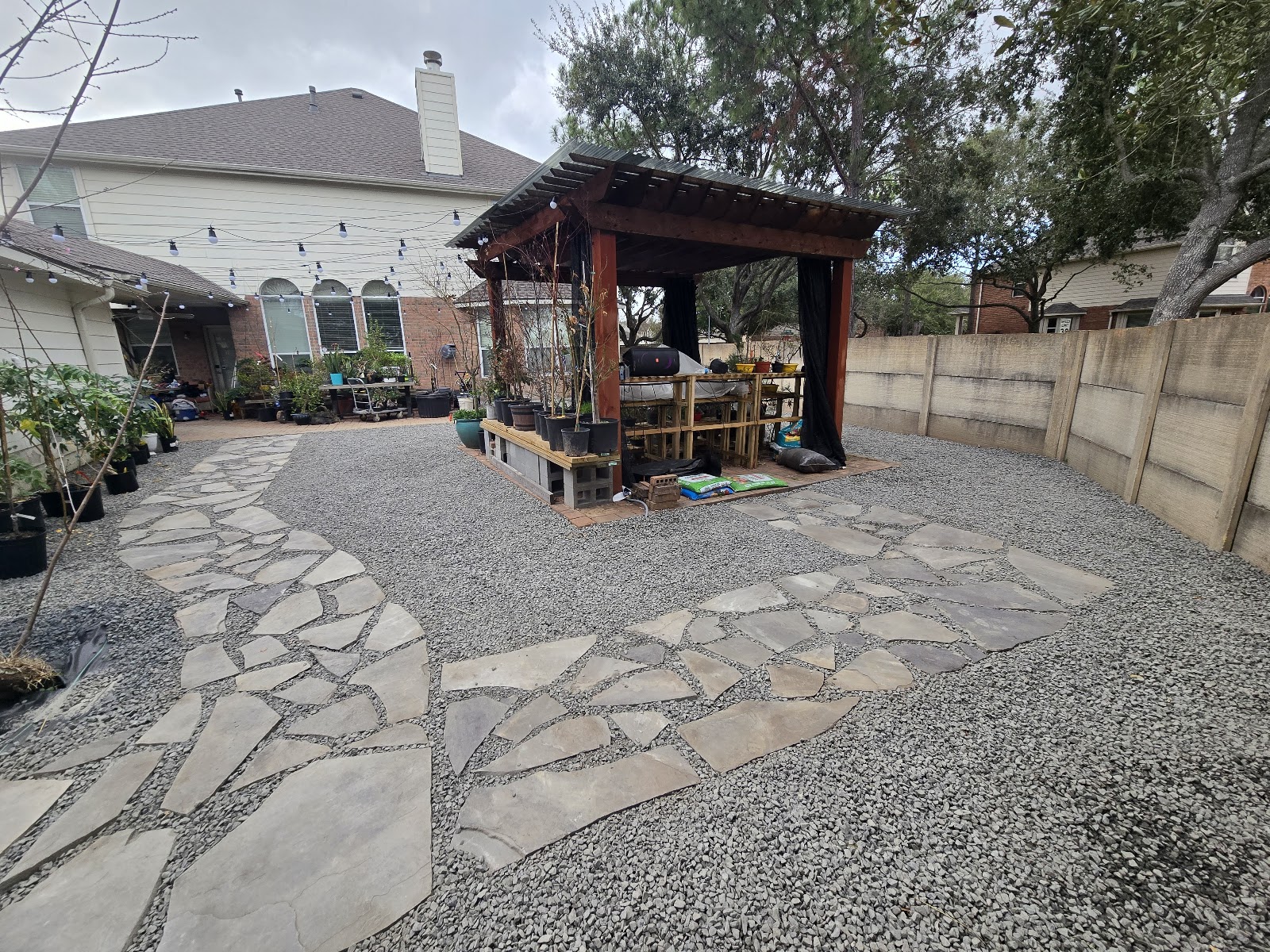
Not all gravel is created equal when it comes to staying put. Small pea gravel looks nice but moves easily. Crushed granite or crushed limestone, which are common in Houston landscaping, have jagged edges that lock together better. Larger river rock, in the 1 to 2 inch range, won't move in most storms. The trade-off is aesthetics. Crushed stone looks more refined than big river rock, but it also stays where you put it.
If you want the smaller, neater look, go with crushed granite. It's readily available in Houston and the angular pieces grip each other. Size matters too. Anything smaller than half an inch will wash away in heavy rain. Stick with half-inch minimum, and ideally three-quarter inch if you're in a spot that catches runoff.
Create a Containment Barrier
The best defense is a physical barrier. Metal or plastic landscape edging sunk at least 3 inches into the ground will hold gravel in place. In Houston's heat, plastic edging can warp over time, so steel edging lasts longer. You'll see it at most landscaping supply yards on the north and southwest sides of the city.
Run the edging along the downhill side of gravel beds and along the edges of driveways. The edging doesn't just stop the gravel. It also defines the space and keeps the gravel from spreading into your lawn or flower beds. If you've already got gravel without edging, adding it now will save you money on replacement gravel later.
Slope and Drainage Matter
If your gravel sits in a low spot that collects water, you're fighting a losing battle. Water wants to flow downhill, and it will take gravel with it. Before you add or replace gravel, look at where water actually goes when it rains. Does it pool in one area? Does it run toward your driveway or foundation?
You can't always change the slope of your property, but you can direct water. A shallow swale, which is just a gradual dip in the ground, can guide water away from gravel beds and toward a storm drain or the street. It doesn't have to be deep or dramatic. Even a 2 to 3 percent slope, which you can barely see, makes a difference. If gravel sits on completely flat ground, it stays put better than if it's on a slope.
Add a Stabilizing Underlayer
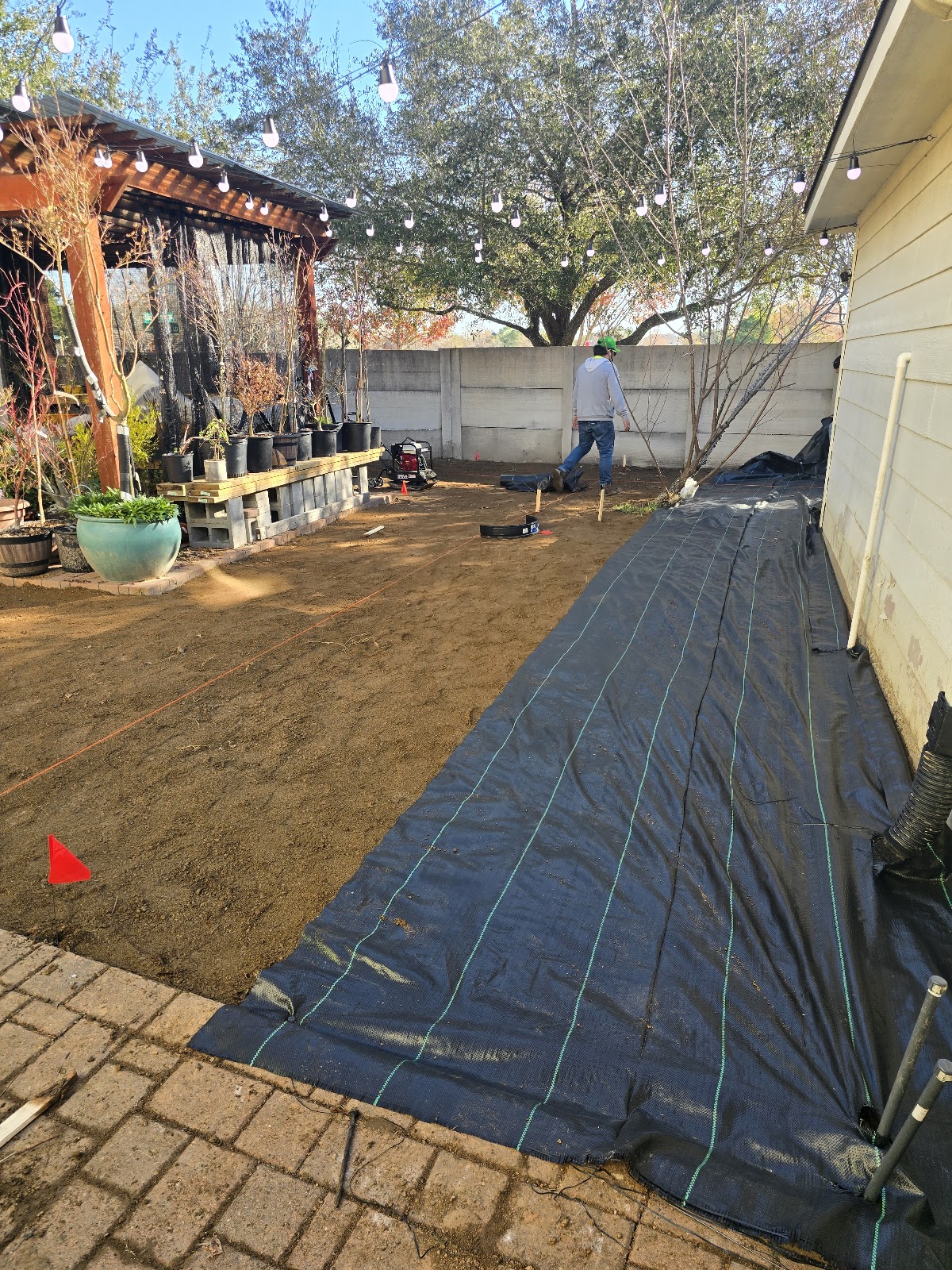
Landscape fabric under the gravel helps, but only if you use the right kind. The thin stuff you find at big box stores tears and shifts. Better options are thicker non-woven fabric or a gravel stabilization grid. The grid is plastic webbing that locks the gravel in place. It's more expensive upfront but worth it if you're in a high-flow area.
Lay the fabric or grid, then add your gravel on top. This does two things: it keeps the gravel from sinking into the soil below, and it prevents the soil from pushing up through the gravel. In Houston's wet climate, this matters. Without it, you'll see soil erosion underneath, and your gravel layer gets thinner every year.
Maintenance and Raking
Even with all these steps, gravel needs attention. After a heavy rain, take a rake through your gravel beds and driveways. It only takes a few minutes to push gravel back where it belongs and spot any areas where water is pooling. If you see bare spots forming in the same place each time it rains, that's where water is running hardest. That's the spot to focus on, whether that means adding edging, adjusting the slope, or switching to larger stone.
A light raking also breaks up any crust that forms on top of gravel in Houston's heat, which helps water penetrate instead of running off.
Call UVP Lawn Care and Landscaping
Keeping gravel in place takes planning and the right materials. If you're tired of chasing your gravel across the yard after every storm, reach out to UVP Lawn Care and Landscaping in Houston. We can evaluate your drainage, recommend the right gravel and containment setup, and install it so it actually stays put. Call us today to schedule a walkthrough of your property.